
Gir Cow Milk Nutrition Facts: Protein, Fat & More
“Packed with nutrients” shows up on almost every Gir cow milk page without a single actual number behind it. The real composition data exists, it’s been studied in published dairy science research, and it’s more specific and more interesting than a generic health claim.
Published compositional studies on Gir cow milk report an average fat content around 4.5 to 5%, protein around 3.2 to 3.3%, lactose around 4.7 to 4.9%, and solids-not-fat (SNF) around 8.5 to 8.6%, with the protein fraction naturally containing the A2 variant of beta-casein rather than A1. These are breed averages from agricultural research, not a guarantee for any single bottle, actual composition shifts with season, lactation stage and individual animal.
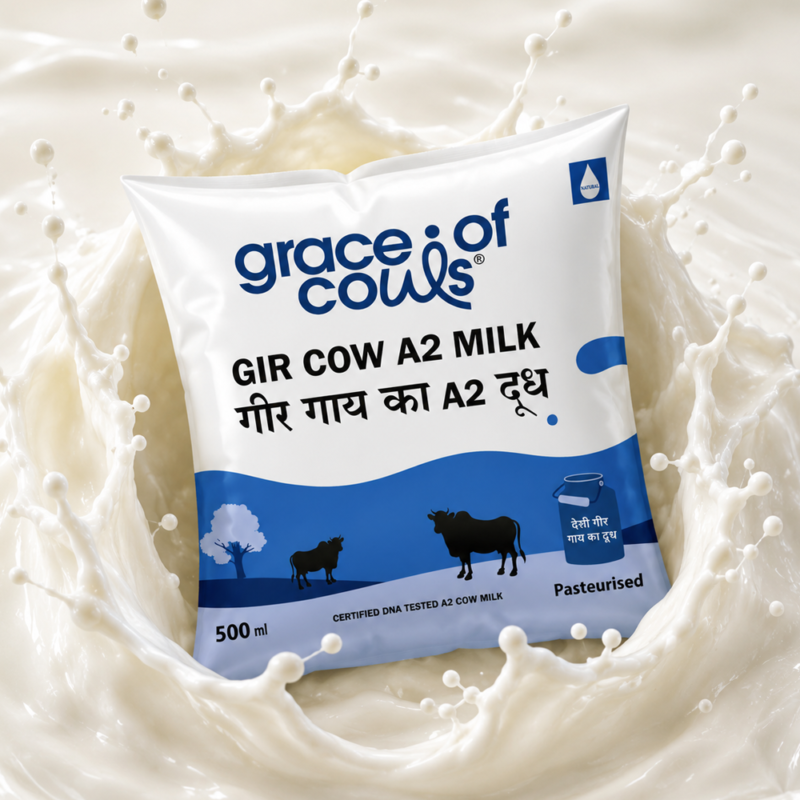
Typical Composition of Gir Cow Milk
Component | Typical value | What it means
- Fat : ~4.5–5% (studies range roughly 3.9–5.4%) – Higher than average cow milk fat (typically 3.5–4.5%), relevant for ghee yield and richness
- Protein : ~3.2–3.3% (range roughly 2.9–3.9%) – Includes the A2 beta-casein variant that distinguishes Gir milk from A1-dominant breeds
- SNF (solids-not-fat) : ~8.5–8.6% (range roughly 8.2–9.6%) – Covers protein, lactose and minerals combined, a general indicator of milk richness
- Lactose : ~4.7–4.9% – The natural milk sugar, present in Gir milk the same as any other cow’s milk
- Water content : ~86–87% – The base of milk regardless of breed
These figures are drawn from published agricultural and dairy science studies on Gir cattle, which consistently show some variation between herds, seasons and individual animals, fat content in particular tends to run higher in cooler months and dip during peak summer heat.
What "A2" Actually Changes in the Protein Fraction
The protein percentage itself isn’t dramatically different from other cow breeds, roughly 3.2 to 3.3% is a normal range for cow milk generally. What’s different is the type of beta-casein within that protein. Gir cows naturally carry two copies of the A2 gene (A2A2), so the beta-casein in genuine Gir milk is the A2 variant rather than the A1 variant common in Holstein-Friesian and many crossbred cattle. This is a genetic distinction, not a difference you’d see in a basic fat-and-protein nutrition label, which is exactly why a DNA test matters more than the composition numbers alone.
Vitamins and Minerals
Beyond fat, protein and lactose, cow milk generally carries meaningful amounts of calcium, phosphorus and small amounts of fat-soluble vitamins, including vitamin A. Reported values for these vary more widely across sources than the core fat and protein figures do, and less rigorous research exists specifically isolating Gir milk’s vitamin and mineral content compared to its fat and protein composition. Treat any single-decimal vitamin figure you see for Gir milk specifically as an approximate, commonly cited range rather than a precisely established constant.
How This Compares to Regular Cow Milk
Standard commercial cow milk, often from Holstein-Friesian or crossbred herds, typically runs lower in fat, closer to 3.5 to 4.5%, and carries a mix of A1 and A2 beta-casein rather than A2 exclusively.
Gir milk’s naturally higher fat content is part of why it’s considered well suited to ghee production, more fat generally means better ghee yield per litre of milk, alongside the A2A2 genetic distinction that’s the main reason people specifically seek it out.
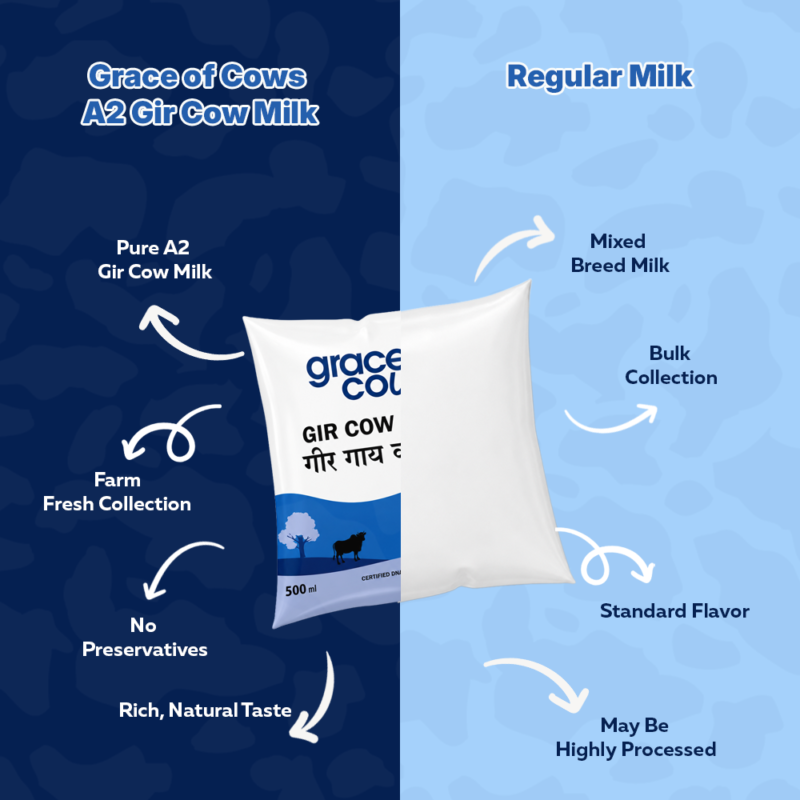
Why the Numbers on This Page Aren't a Substitute for Testing Your Own Milk
These are breed averages compiled from agricultural research, not a certificate for any specific seller’s product. A dairy claiming Gir cow milk should still be able to show you an actual test result for what’s in their own herd’s milk, since real variation exists between herds even within the same breed, and the only way to know your specific bottle matches these figures is a direct test, not an assumption based on breed averages.
Where Grace of Cows Fits
Grace of Cows tests its 300+ Gir cow herd’s milk every day in our own dairy lab and lab tests regularly for the A2A2 gene, so what you’re buying is confirmed against an actual result, not just these breed-level averages. The same herd’s milk is also used for traditional Bilona ghee and fresh paneer, delivered across Pune since 2015.
Gir cow milk’s nutrition profile is genuinely well documented, higher fat, naturally A2 protein, a normal lactose and mineral base like any cow’s milk. The number worth asking a seller for isn’t a generic nutrition claim, it’s whether their specific herd has actually been tested against it.
Read the Gir cow breed guide for what defines the breed behind these numbers, how Bilona ghee is made to see how that higher fat content translates into ghee, or the best A2 milk in Pune guide for how to verify any seller’s claim. Ready to try it? Order Gir cow A2 milk from Grace of Cows.
Published dairy studies typically report Gir cow milk fat content averaging around 4.5 to 5%, with a broader range of roughly 3.9 to 5.4% depending on the study, season and individual animal. This is generally higher than standard commercial cow milk, which usually runs 3.5 to 4.5%.
Studies typically report Gir cow milk protein around 3.2 to 3.3%, within a normal range of roughly 2.9 to 3.9%. The distinguishing factor isn’t the protein amount but the type, Gir milk’s beta-casein is naturally the A2 variant rather than A1.
Gir cow milk generally runs higher in fat than standard commercial cow milk and carries A2 rather than mixed A1/A2 beta-casein. Core components like lactose and water content are broadly similar to any cow’s milk, the meaningful differences are in fat content and protein type, not a dramatically different overall nutrient profile.
Yes. Fat and protein figures are relatively well studied and consistent across sources, but vitamin and mineral values reported for Gir milk specifically vary more, and should be treated as approximate rather than precisely fixed numbers.
Grace of Cows tests its 300+ Gir cow herd’s milk every day in our own dairy lab and lab tests regularly for the A2A2 gene, so what’s delivered is confirmed against an actual result for that herd rather than just assumed from general breed averages.

