
Gir Cow Breed: Origin, Characteristics & Facts (2026)
Plenty of red-and-white spotted cows in India get called “Gir” because they’re a desi breed and nobody’s checking further. The actual Gir breed is a specific, documented breed with a specific origin, a specific look, and specific milk genetics, not a catch-all term for any indigenous cow.
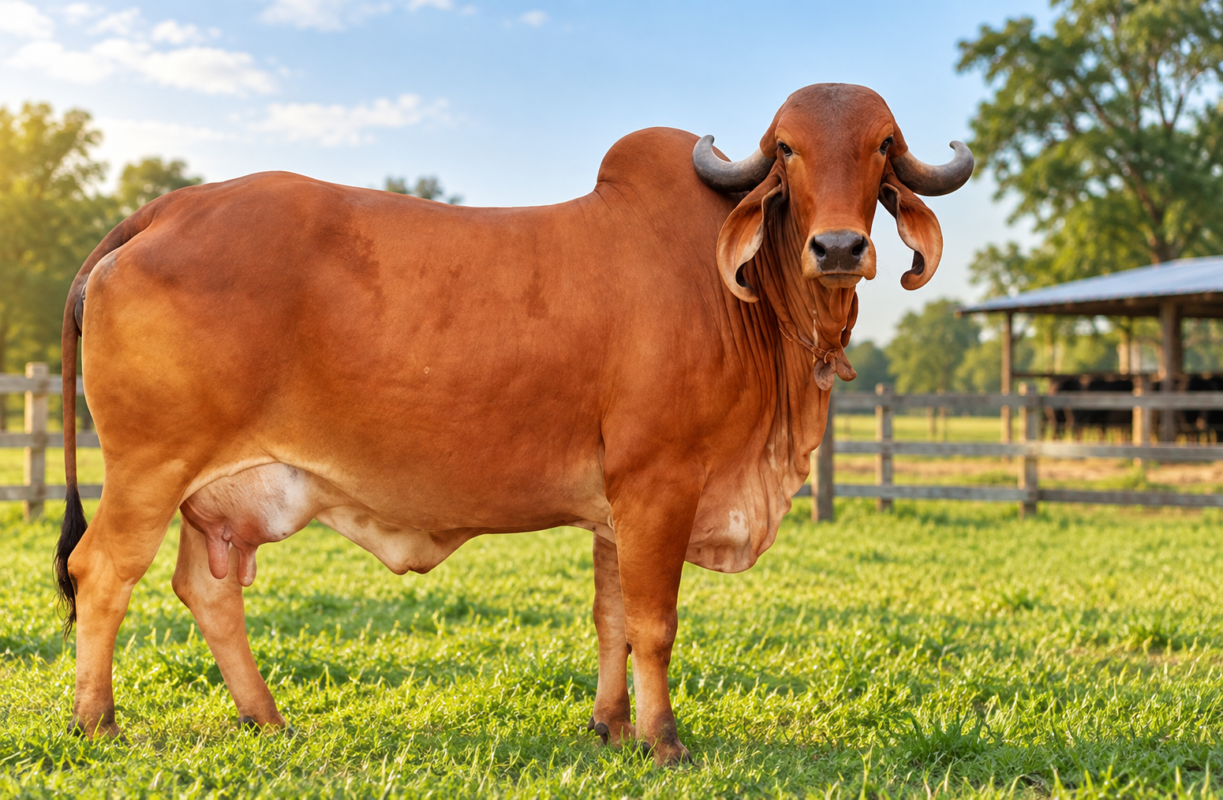
Gir cattle originated in the Gir forests and hills of the Kathiawar region in Gujarat, in the districts of Junagadh, Amreli, Bhavnagar and Rajkot, and they’re identified by a domed forehead, long pendulous leaf-shaped ears and half-moon curved horns, not just their coat colour.
That’s the breed behind most of what’s marketed as genuine Gir cow milk today.
Where the Gir Breed Actually Comes From
The breed takes its name from the Gir forest region of Saurashtra, in southwest Gujarat. It’s an ancient Bos indicus (Zebu) breed, meaning it carries the characteristic hump and heat-adapted physiology of Indian cattle rather than the European Bos taurus lineage.
From its native tract in Gujarat, the breed has spread to Maharashtra and Rajasthan, and organized breeding programs now exist as far as Brazil, the United States, Mexico and Venezuela. Gir genetics were also one of the founding breeds used to develop the American Brahman.
How to Identify a Genuine Gir Cow
Trait : What to look for
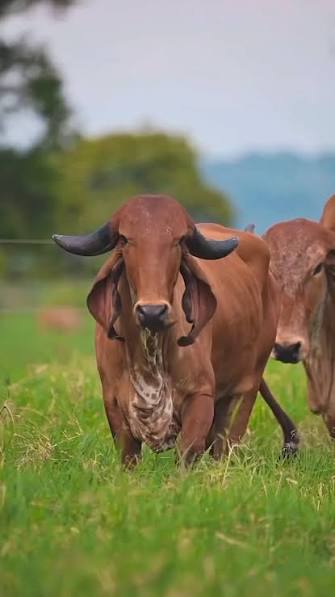
- Forehead : Broad, convex, dome-shaped, often described as a bony shield
- Ears : Long, pendulous, folded at the tip like a leaf, highly mobile
- Horns : Thick at the base, curving down and back, then sweeping up in a half-moon spiral
- Coat colour : Ranges from pure red to yellowish-red to white with large red or white patches, no two animals identical
- Hump : Prominent, more pronounced in bulls, a defining Zebu trait
- Build : Cows typically 400–500 kg, bulls 540–650 kg, with a prominent hip bone and straight or slightly sloped back
No single trait proves a cow is Gir on its own. It’s the combination, the forehead, the ears, the horn shape and the hump together, that separates a genuine Gir cow from a mixed-breed animal that happens to share a similar coat colour.
Why the Breed Survives Where Others Struggle
Gir cattle are known for tolerating heat and drought better than most dairy breeds, a trait that matters directly in a country where summer temperatures regularly test imported or crossbred herds. Their skin is loose and pliable, which helps with temperature regulation, and the breed shows strong natural resistance to common tropical cattle diseases. Gir cows are also known for a notably long lactation period, often around 300 to 325 days, longer than most other Indian indigenous breeds, meaning they produce milk for close to eleven months of the year rather than tapering off early.
Temperament is another consistent trait across sources describing the breed: Gir cattle are generally docile, easy to handle, and known for close bonding with their calves, often forming a tight circle at night with calves sleeping close by. That combination of hardiness and manageability is a large part of why the breed has remained a preferred choice for indigenous dairy farming for generations.
Milk and the A2A2 Genetics Behind It
Gir cows are one of the desi breeds that naturally carry two copies of the A2 beta-casein gene (A2A2), rather than the A1 variant common in Holstein-Friesian and many crossbred cattle.
That genetic makeup is the reason Gir milk is widely marketed as A2 milk, but breed alone isn’t proof, since genetic drift and mixed breeding can occur even within herds labelled as Gir.
A DNA test on the actual milk sample is the only way to confirm A2A2 status with certainty, breed identification by eye gets you close, not exact.
Where Grace of Cows Fits
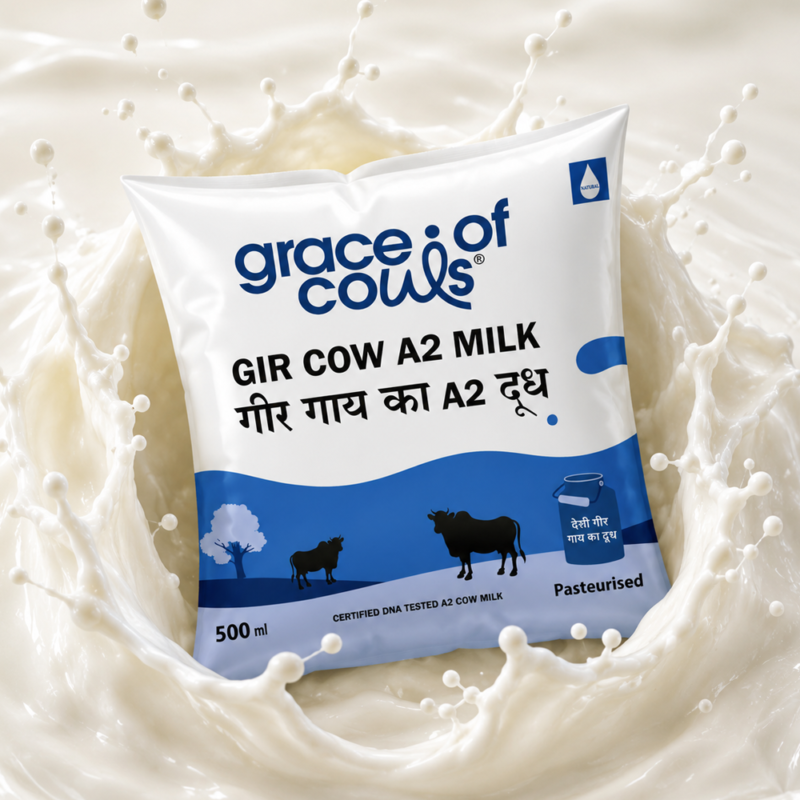
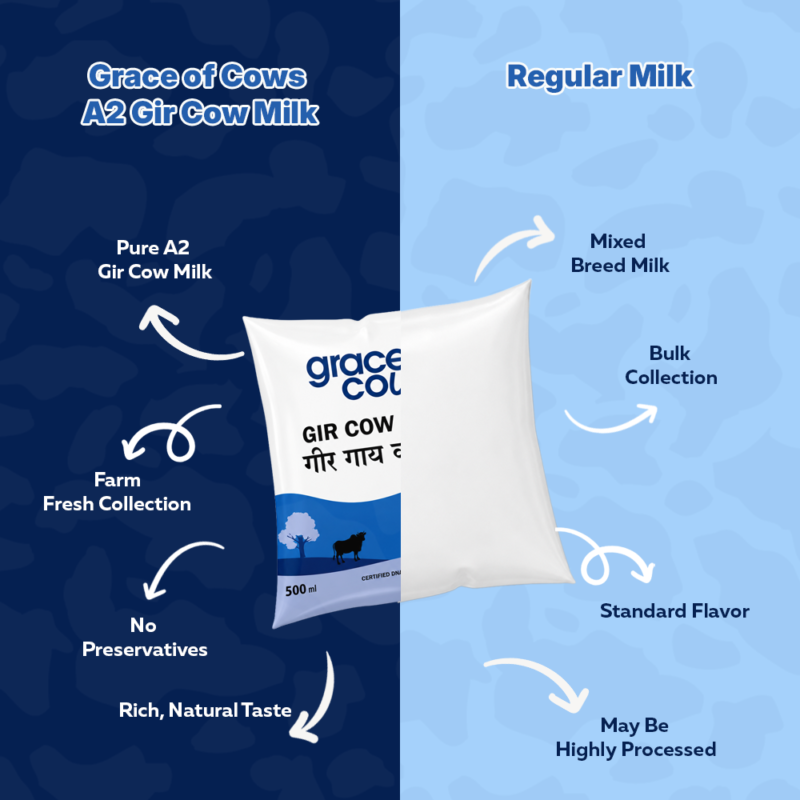
Grace of Cows runs a herd of 300+ Gir cows raised in Maharashtra, tested every day in our own dairy lab and lab tested regularly for the A2A2 gene. The same herd produces traditional Bilona ghee and fresh paneer, sold and delivered across Pune since 2015.
A cow doesn’t become “Gir” because a seller says so. It’s a specific breed with a specific origin and a specific genetic profile, and the closer you look at those specifics, the easier it becomes to tell a genuine Gir cow herd from a marketing label borrowed from one.
Read the best A2 milk in Pune guide for how to verify any seller’s claim, Gir vs Sahiwal vs Red Sindhi if you’re comparing desi breeds, or the Gir cow milk nutrition facts for what’s actually in the milk itself. Ready to try genuine Gir cow A2 milk? Order from Grace of Cows.
The Gir breed originated in the Gir forests and hills of the Kathiawar region in Gujarat, specifically in the Junagadh, Amreli, Bhavnagar and Rajkot districts. It has since spread to Maharashtra, Rajasthan and, through organized breeding programs, to countries like Brazil, the US and Mexico.
Look for a broad domed forehead, long pendulous ears folded like a leaf at the tip, and horns that curve down and back before sweeping up in a half-moon spiral. Coat colour alone (red, yellowish-red or white with patches) isn’t enough on its own to confirm the breed.
Gir cattle naturally carry the A2A2 genotype, so genuine Gir cow milk is typically A2 milk. But mixed breeding and herd management can affect this, so a genetic test on the actual milk sample is the only way to confirm A2A2 status with certainty rather than assuming it from the breed name.
Gir cows are known for one of the longest lactation periods among Indian indigenous breeds, often around 300 to 325 days, meaning they produce milk for close to eleven months of the year rather than tapering off early like many other breeds.
Gir cattle tolerate heat and drought better than many dairy breeds, show strong natural resistance to common tropical diseases, and are generally docile and easy to manage, a combination that’s made them a preferred choice for indigenous dairy farming for generations.
Yes, Grace of Cows’ entire herd of 300+ cows is Gir breed, raised in Maharashtra, tested every day in-house and lab tested regularly for the A2A2 gene, with milk, ghee and paneer delivered across Pune since 2015.

