Desi Cow Milk in Pune: What It Is & Where to Buy (2026)
“Desi” has turned into a word sellers reach for whenever they want milk to sound more traditional than a supermarket carton, whether or not an actual indigenous breed is behind it. In Pune, where the desi milk market is genuinely growing, that gap between the word and what it should mean is worth closing before you buy.
**Genuine desi cow milk comes specifically from indigenous Indian cattle breeds, Bos indicus, like Gir, Sahiwal and Red Sindhi, not from crossbred or exotic breeds like Holstein-Friesian and Jersey, and most of these desi breeds naturally carry the A2A2 beta-casein gene.** The word “desi” describes the breed category. It doesn’t, by itself, tell you whether that claim has actually been verified.
What Actually Makes Milk “Desi”
The distinction is genetic and historical, not just marketing. Indian dairy cattle split broadly into two categories: Bos indicus, the humped, heat-adapted zebu breeds native to the Indian subcontinent, and Bos taurus or crossbred cattle, largely imported or hybridized breeds like Holstein-Friesian and Jersey bred for high volume in temperate climates. “Desi cow” refers specifically to the Bos indicus breeds, Gir, Sahiwal, Red Sindhi, Tharparkar and others, developed over centuries in Indian conditions.
Most of these desi breeds naturally carry two copies of the A2 beta-casein gene, which is why “desi” and “A2” get used almost interchangeably in casual conversation. They’re related but not identical claims, a cow can be genuinely desi without ever having been genetically tested to confirm A2A2 status, and a herd can be mismanaged into mixed breeding even while still broadly called desi.
Desi Cow Milk vs Regular Commercial Milk
| Desi cow milk | Regular commercial milk | |
|---|---|---|
| Source breed | Indigenous Bos indicus (Gir, Sahiwal, Red Sindhi, etc.) | Often Holstein-Friesian, Jersey or crossbred |
| Beta-casein protein | Typically A2 only, if genuinely purebred and tested | Usually a mix of A1 and A2 |
| Fat content | Generally higher, breed dependent | Generally lower, standardized across large herds |
| Herd scale | Usually smaller, more traceable | Often large-scale, pooled from many sources |
| Verification | Should be confirmed by DNA testing on the milk | Rarely tested for beta-casein type at all |
Why More Pune Buyers Are Specifically Looking for Desi Milk
Pune’s dairy market has shifted noticeably over the past several years, with a growing number of households actively searching for desi or A2 milk by name rather than defaulting to whatever packaged milk is on the nearest shelf. Some of that is digestion-driven, some of it is a preference for traditional sourcing over industrial dairy, and some of it is simply that more people now know the word “A2” exists and want to check whether their milk qualifies. Whatever the reason, it’s created a market where sellers know the word “desi” sells, which is exactly why checking behind the word matters more, not less.
How to Find Genuine Desi Cow Milk in Pune
- Ask which specific breed is behind the milk, not just whether it’s “desi.”
- Ask whether the milk has actually been DNA tested for A2A2, and how often.
- Ask whether test results are published or only shared when someone asks.
- Ask about herd size and location, a seller who can’t describe their own herd is a red flag.
- Compare the price against what genuine testing and a smaller, purebred herd typically cost, an unusually cheap “desi A2” claim is worth questioning.
Where Grace of Cows Fits
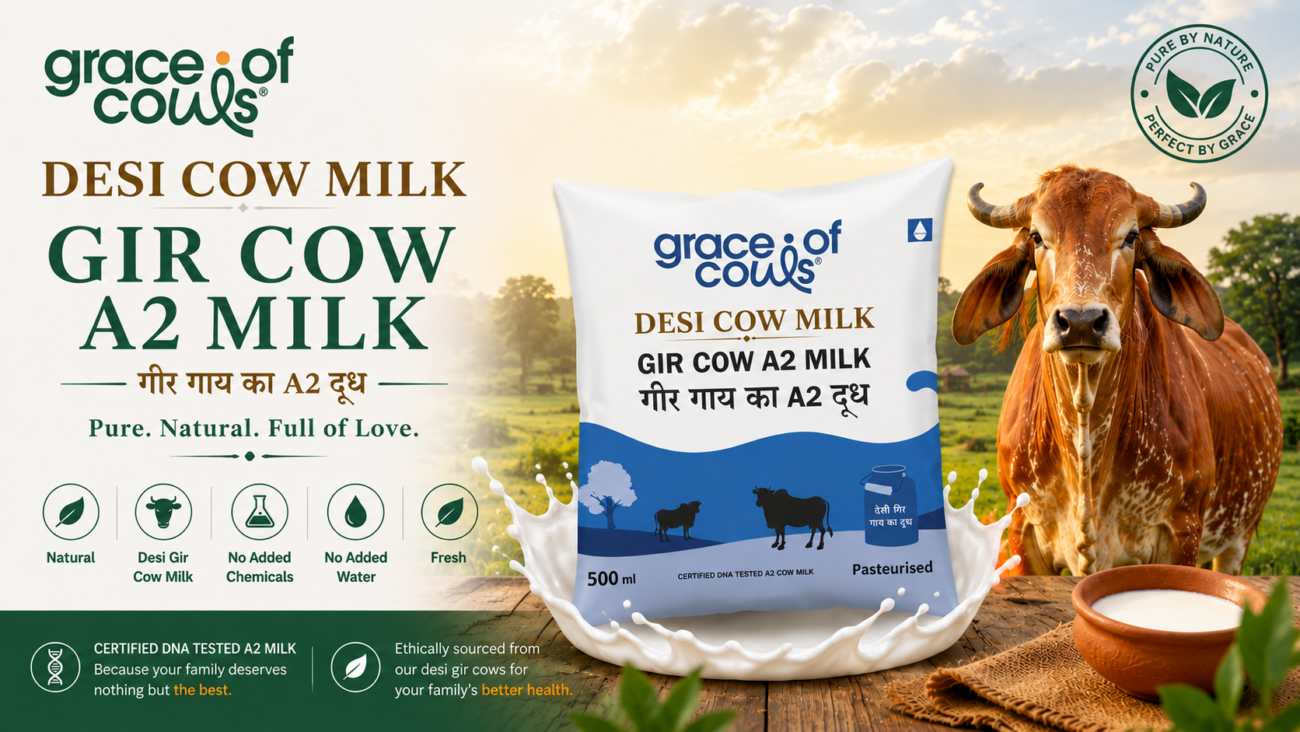
Grace of Cows works specifically with Gir cattle, one of India’s most established desi dairy breeds, a herd of 300+ cows raised in Maharashtra. Milk is tested every day in our own dairy lab and lab tested regularly for the A2A2 gene, with home delivery across Pune since 2015, alongside traditional Bilona ghee and fresh paneer from the same herd.
The Bottom Line
“Desi” is a real, meaningful category, not just a nicer-sounding word for local milk. The buyers who get the most out of it are the ones who ask which specific breed, and what testing, is actually behind the label.
Read the Gir cow breed guide to understand the specific breed behind Grace of Cows’ milk, Gir vs Sahiwal vs Red Sindhi if you’re comparing desi breeds directly, or desi Gir cow milk in Pune for delivery specifics. Ready to try it? Order genuine desi Gir cow A2 milk.
FAQ
Q: What qualifies as desi cow milk?
A: Desi cow milk comes from indigenous Indian cattle breeds (Bos indicus) like Gir, Sahiwal and Red Sindhi, as opposed to crossbred or exotic breeds like Holstein-Friesian and Jersey. It’s a breed category, not automatically a guarantee of A2A2 testing.
Q: Is desi cow milk the same as A2 milk?
A: Related but not identical. Most desi breeds naturally carry the A2A2 gene, so genuine desi cow milk is typically A2 milk. But “desi” alone doesn’t confirm that testing has happened, a DNA test on the milk is what actually verifies A2A2 status.
Q: Why is desi cow milk more expensive than regular milk in Pune?
A: Desi herds are typically smaller and less industrialized than commercial dairy operations, and genuine testing adds ongoing cost. Together these generally push the price above standard packaged milk, though exact pricing varies by seller.
Q: How can I tell if desi cow milk in Pune is genuine?
A: Ask which specific breed is behind it, whether it’s been DNA tested for A2A2 and how often, and whether results are published. A seller who can answer all three specifically is more trustworthy than one relying on the word “desi” alone.
Q: Does Grace of Cows deliver genuine desi cow milk across Pune?
A: Yes, Grace of Cows delivers Gir cow milk, tested every day in our own dairy lab and lab tested regularly for the A2A2 gene, across multiple Pune localities, with service running since 2015.

